
That Warm Spell Feels Great. Your Roof Disagrees.
There’s a particular kind of optimism that hits Calgarians during a Chinook. You wake up to minus 25, scrape the ice off your windshield with numb fingers, and curse the city you chose to live in. By noon, the temperature has climbed 20 degrees. By mid-afternoon, snow is melting off the sidewalks, people are walking around in hoodies, and the whole city has that giddy, we-got-away-with-something energy.
Your roof is not sharing that enthusiasm. While you’re enjoying the warm spell, a quiet, destructive process is playing out above your head — one that will repeat itself dozens of times between November and March, and one that ages your roof faster than almost anything else this climate throws at it.
The Freeze-Thaw Cycle Is Your Roof’s Worst Enemy
Calgary experiences more dramatic and frequent freeze-thaw cycles than virtually any other Canadian city, and Chinooks are the primary driver. Here’s what happens to your roof every time one rolls through.
Snow and ice sitting on your shingles start melting fast as the temperature climbs. Meltwater finds its way into every available crevice — under shingle edges, around flashing joints, into hairline cracks in the sealant, down alongside vent pipe boots. Water is patient and persistent. It goes wherever gravity and capillary action take it.
Then the temperature drops. Sometimes it happens the same afternoon. Sometimes overnight. The water that just seeped into every tiny gap freezes. And when water freezes, it expands — roughly nine percent by volume. That expansion pries open cracks, pushes apart sealant joints, loosens flashing adhesion, and widens the micro-gaps in your shingle surface.
The next Chinook comes through and the cycle repeats. Every repetition makes the gaps a little wider, the cracks a little deeper, the seals a little weaker. Multiply that by dozens of cycles over a single winter, and then multiply by the fifteen or twenty winters a roof endures over its lifetime, and you start to understand why Calgary roofs age faster than the manufacturers’ lifespan estimates suggest.
See also: Newsbala and Newspik: Multi-Category Fast-Indexing
Asphalt Shingles Are Uniquely Vulnerable
Every roofing material is affected by thermal cycling, but asphalt shingles are particularly susceptible because of how they’re engineered. Each shingle has a factory-applied adhesive strip along its lower edge. That strip is designed to bond to the shingle below it, creating a single, wind-resistant surface. In theory, those bonds hold for the life of the shingle.
In Calgary’s reality, constant expansion and contraction weaken those adhesive bonds over time. The strips get stiff. The bond loses its grip. Individual shingle tabs start to separate from the layer below, curling upward at the edges or flapping loose. Once that happens, the shingle catches wind like a small sail. During a strong Chinook gust — and these can easily exceed 100 kilometres an hour — those loosened tabs tear off entirely.
Finding shingle fragments in your yard after a Chinook event isn’t unusual. It’s a sign your residential roofing system is reaching its breaking point.It’s your roof telling you that the adhesive system is failing and the shingles have become vulnerable to wind damage in a way they weren’t when they were new.
Flashing Takes the Hit Differently — But Just as Hard
The metal flashing around your chimney, vents, and skylights expands and contracts at a different rate than the wood decking, shingles, and masonry it’s attached to. Every temperature swing stresses the interface between these dissimilar materials. The caulking and sealant that bridges the gap dries out incrementally, develops hairline cracks, and eventually separates.
I inspected a home in Signal Hill last fall where the chimney flashing had pulled away from the mortar by about three millimetres on the south-facing side. Three millimetres. From the ground, you couldn’t see anything wrong. But during every rain event and every snowmelt, water was running straight through that gap and into the wall cavity below. By the time the homeowner noticed a stain on the interior wall, the framing inside had been wet for months.
Flashing failure is insidious because it’s invisible. You can’t see a three-millimetre gap from your driveway. You often can’t see the damage it causes until it’s already extensive. And Chinook-driven thermal cycling is the primary force creating those gaps in Calgary.
Ice Dams Love a Good Chinook
Chinooks create nearly perfect conditions for ice dam formation. The rapid warming melts snow on the upper and middle sections of the roof — the parts above your heated living space — while the eaves stay cold because they overhang beyond the exterior walls. Meltwater runs down the warm slope and refreezes the moment it reaches the cold eave.
Ice builds up along the gutter line, layer by layer, forming a dam that traps subsequent meltwater behind it. That pooled water has nowhere to go except under the shingles and into the roof structure. Stained ceilings, soggy attic insulation, warped drywall — all of it traces back to ice dams, and Chinooks are the trigger that creates them most often.
Good attic insulation and ventilation can prevent ice dams by keeping the entire roof surface close to outdoor temperature (see our article on attic ventilation for the full breakdown). But if your insulation is thin or your ventilation is compromised, every Chinook is creating the conditions for water to enter your home.
Condensation — The Damage You Can’t See and Can’t Hear
Inside your attic, warm air rising from the living space meets the cold underside of the roof deck. Under stable conditions, proper ventilation handles this by exhausting the warm air before it can condense. During a Chinook, the rapid temperature swings make this harder. The attic environment becomes unstable — cycling between warm and cold faster than the ventilation system can keep up with.
The result is condensation forming on the roof deck, the rafters, and the top layer of insulation. Over time — and “over time” can mean just a few weeks of repeated Chinook cycles — that moisture leads to damp insulation (which loses its effectiveness), wood rot on the structural members, and mould that can affect indoor air quality without anyone ever seeing it.
This is damage that builds invisibly. There’s no drip. No stain. No sound. Just moisture accumulating in an enclosed space that nobody checks until something fails conspicuously enough to warrant an investigation.
Drainage Gets Overwhelmed During Rapid Melts
When a Chinook hits after a heavy snowfall, the melt volume can be enormous. Snow that accumulated over weeks suddenly liquefies in hours. All that water needs somewhere to go.
If your gutters are clogged — and after weeks of winter, they probably are — water overflows at the eaves and pours down the siding. If your downspouts are frozen shut or disconnected, the water dumps right at the foundation line. If the grading around your house slopes toward the foundation instead of away from it, that water pools against your basement walls.
Basement flooding, foundation erosion, and settling are real consequences of poor drainage during rapid Chinook melts. Keep your gutters cleared throughout the winter, not just in spring. Check that downspouts are flowing freely after a Chinook event. Make sure the ground around your house is graded to move water away from the foundation.
Older Roofs Are Exponentially More Vulnerable
A newer roof with fresh shingles and intact sealant handles thermal cycling reasonably well. The materials are flexible, the bonds are strong, and the system has margin built in. A 15 or 20-year-old roof that’s already been through hundreds of freeze-thaw events is a different story entirely.
Cumulative damage adds up quietly. The shingle adhesive is weaker. The asphalt has lost some of its flexibility to UV degradation. The flashing sealants have dried and cracked. The underlayment beneath the shingles has been absorbing thermal stress for decades. The roof might look acceptable from the street — no missing shingles, no obvious sag — but the material properties have degraded to the point where each additional Chinook cycle does more damage than it would have five years earlier.
This is the kind of deterioration that only a hands-on roof inspection can catch. From the ground, a 20-year-old roof in Calgary might look like it has five more years of life. Up close, the reality might be very different.
What You Can Actually Do About It
You can’t stop Chinooks. They’re part of the deal when you live in this city. But you can make sure your roof is as prepared for them as possible.
Start with twice-a-year inspections — fall before winter, and spring after the worst is over. Walk the perimeter of your house after significant Chinook events and scan for visible changes: displaced shingles, debris in the valleys, icicles forming where they didn’t before.
Make sure your attic insulation meets R-50 and your ventilation system is actually working — not just present, but functioning. Seal air leaks around ceiling penetrations. Keep gutters clear throughout winter. Trim overhanging branches that could break during gusts and damage the roof surface.
And if your roof is aging, consider upgrading to impact-resistant, high-wind-rated shingles when replacement time comes. Class 4 products with wind ratings above 130 km/h cost more upfront but stand up dramatically better to the thermal and wind stresses that Chinooks produce. Some insurance companies even offer premium discounts for installing them.
The Chinooks will keep coming. Make sure your roof is ready each time they do.

 By
By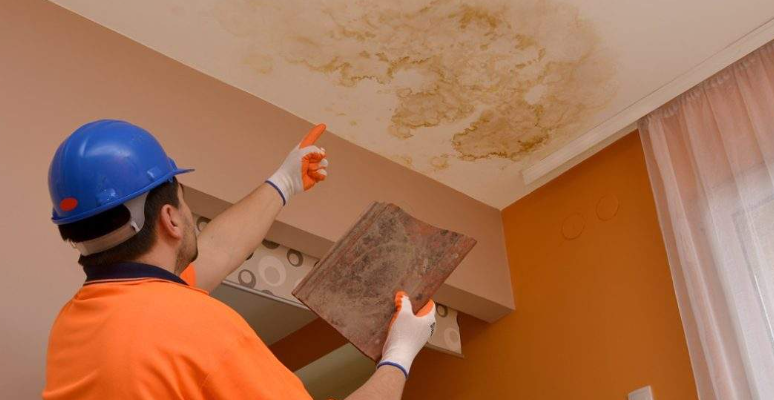



 By
By